Ask ten yoga practitioners to explain the difference between Kundalini and Hatha Yoga, and you'll likely get ten slightly different answers — partly because the two overlap so much in practice that the line between them can feel blurry. Both use posture, breath, and meditation. Both come from the same broad tradition. But they were designed with different primary aims, and understanding that difference makes it much easier to know which one — or which sequence of the two — is right for you.
What Is Hatha Yoga?
Hatha Yoga is best understood as the physical and energetic foundation underneath most modern yoga styles. The word itself is often translated as "force" or "willful," and traditionally refers to a system of postures (asana), breath control (pranayama), and cleansing techniques (shatkarmas) designed to purify and strengthen the body so that it can sit comfortably and steadily for meditation. Classical Hatha Yoga texts, such as the Hatha Yoga Pradipika, present the physical practice not as an end in itself, but as preparation for deeper meditative states — the same destination that Raja Yoga and Kundalini Yoga are also aimed at, approached from a more physical starting point.
In a retreat or daily practice setting, Hatha Yoga typically includes:
- Asana — physical postures held with steadiness and awareness
- Pranayama — breath control practices to calm and energize the body
- Shatkarmas — traditional cleansing techniques (less common in modern classes)
- Basic meditation — a settled mind as the natural result of a settled body
What Is Kundalini Yoga?
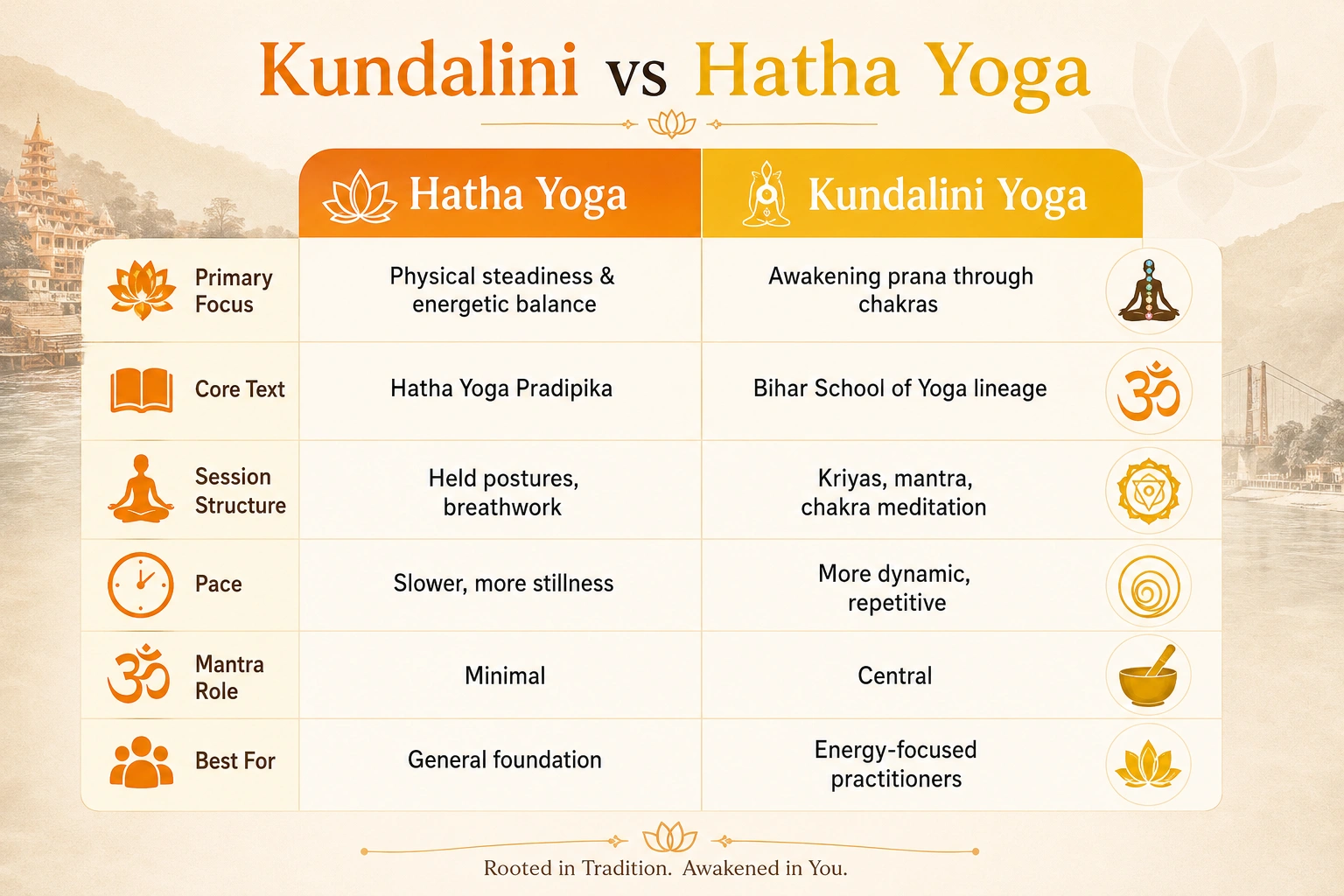
Kundalini Yoga shares many of Hatha Yoga's tools — posture, breath, meditation — but applies them toward a specific goal: awakening and channeling prana, the vital energy said to rest coiled at the base of the spine, up through the chakras. Where Hatha Yoga's postures are often held for general strength, flexibility, and steadiness, Kundalini Yoga's techniques (often called kriyas) are sequenced specifically to move and balance this subtle energy, frequently paired with mantra chanting and focused chakra meditation.
Kundalini Yoga practice typically emphasizes:
- Kriyas — specific sequences combining posture, breath, and movement
- Mantra chanting — sacred sound woven directly into the practice
- Chakra-focused meditation — awareness directed at specific energy centers
- Breath ratios — precise breathing patterns tied to energetic effects
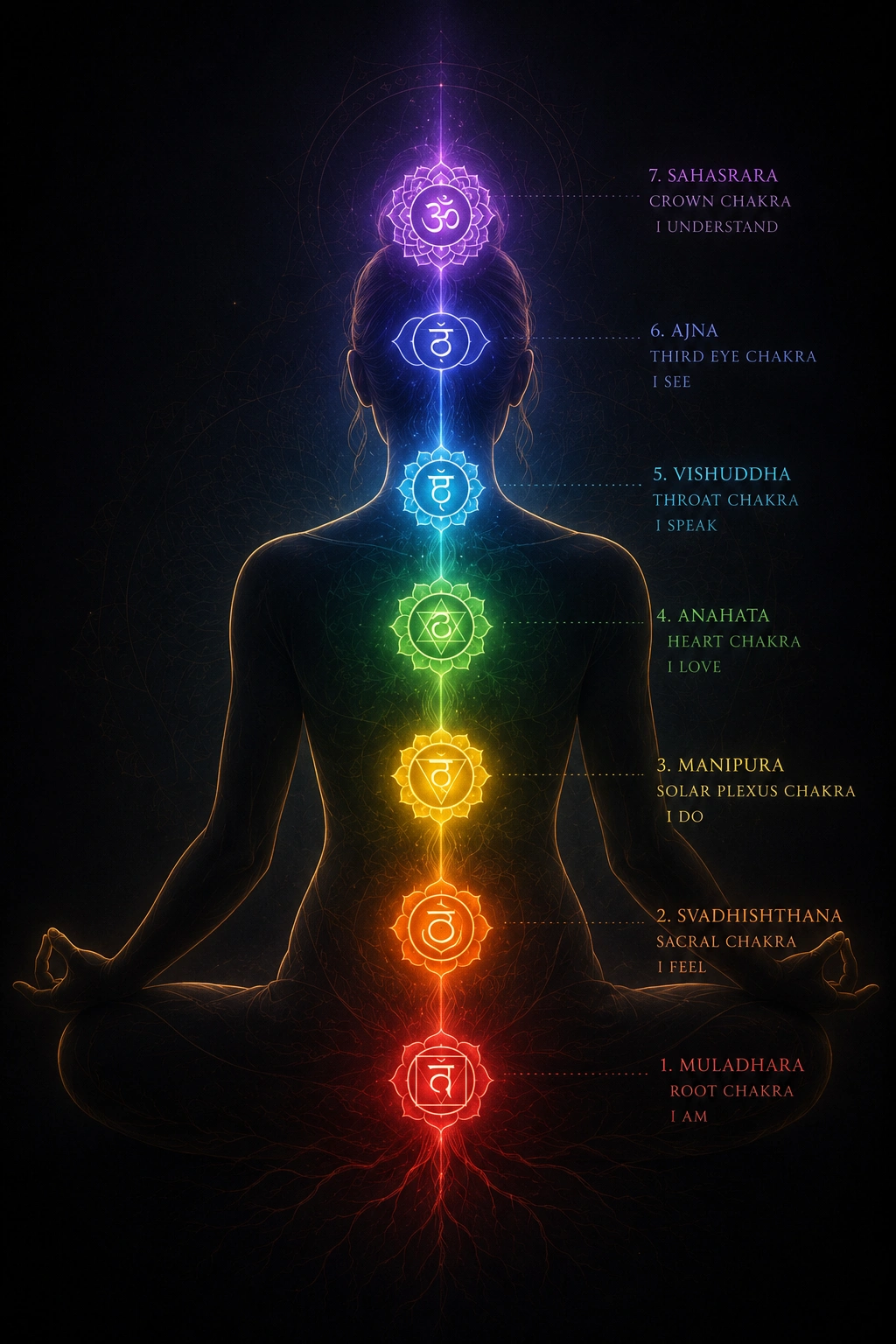
Kundalini vs Hatha Yoga: Key Differences at a Glance
Seeing the two side by side makes clear how much they share, and exactly where they part ways.
| Aspect | Hatha Yoga | Kundalini Yoga |
|---|---|---|
| Primary focus | Physical steadiness and general energetic balance | Awakening and directing prana through the chakras |
| Core text | Hatha Yoga Pradipika and related classical texts | Tantric traditions; Bihar School of Yoga lineage |
| Typical session structure | Held postures, breathwork, relaxation | Kriyas (posture + breath + movement), mantra, chakra meditation |
| Pace | Generally slower, more holding and stillness | Can be more dynamic, with repetitive movement and breath |
| Role of mantra | Optional, often minimal | Central and frequently used |
| Best suited for | Anyone wanting a physical and energetic foundation | Those specifically drawn to subtle-body and energy work |
| Guidance needed | Helpful, though widely self-practiced | Strongly recommended, especially for longer-term practice |
Do They Serve the Same Ultimate Goal?
Yes, largely. Both Hatha and Kundalini Yoga sit within the same broader yogic aim of preparing body and mind for deeper meditative absorption. Hatha Yoga approaches this through general physical mastery — strength, flexibility, steady breath — while Kundalini Yoga takes a more specific, energy-focused route through the same territory. In practice, many traditional retreats teach Hatha Yoga as the daily physical foundation and introduce Kundalini-specific techniques on top of it, rather than treating the two as separate, unrelated systems.
Which Should You Start With?
If you're completely new to yoga, Hatha Yoga is usually the more natural starting point. It builds general strength, flexibility, and breath awareness without requiring any prior grounding, and gives you a physical vocabulary that makes later Kundalini work easier to understand and sustain. If you've already spent time with Hatha Yoga, or you feel specifically drawn to mantra, chakra awareness, or more intense energy work, Kundalini Yoga offers a natural next step — ideally learned under a qualified teacher who can sequence the practice responsibly.
Neither is inherently "better" — they answer different questions. Hatha Yoga asks, "how do I build a steady, capable body and mind?" Kundalini Yoga asks, "how do I direct that steadiness toward specific inner transformation?" Most serious practitioners eventually draw on both.
Historical Origins: Where Each Practice Comes From
Hatha Yoga's textual roots trace back to medieval hatha yogis, most notably systematized in the Hatha Yoga Pradipika (attributed to Swami Svatmarama, roughly 15th century), alongside related texts such as the Gheranda Samhita and Shiva Samhita. These texts describe asana, pranayama, mudras, and cleansing techniques as tools for purifying the body's channels (nadis) so that higher meditative states become accessible. Kundalini Yoga's roots run through a different, older stream — tantric philosophy, which treats the body itself as a map of subtle energy centers to be worked with directly. The two streams were never entirely separate; over centuries, hatha techniques were absorbed into tantric and Kundalini-oriented teaching, which is part of why modern practitioners find so much overlap between them. Traditions like the Bihar School of Yoga, founded by Swami Satyananda Saraswati, deliberately synthesize both — using Hatha Yoga's physical grounding as the doorway into Kundalini's more specific energetic work.
Common Misconceptions About Each Practice
A few misunderstandings come up often enough to be worth addressing directly. Many people assume Hatha Yoga is "just stretching" — in its traditional form, it's a complete system including breath regulation, energetic locks (bandhas), and meditation, not simply a sequence of postures. On the Kundalini side, the most common misconception is that the practice is inherently risky or reserved for advanced practitioners only. In its authentic, lineage-based form, Kundalini Yoga is taught progressively from day one, with intensity introduced gradually rather than all at once. Another frequent mix-up is treating "Kundalini Yoga" and "Kundalini awakening" as the same thing — the practice is the vehicle; awakening, where it happens at all, is a gradual byproduct of sustained, patient practice, not a guaranteed outcome of any single class or sequence.
Choosing Based on Your Specific Goal
It often helps to work backward from what you're actually trying to achieve. If your priority is general fitness, flexibility, and stress relief, a steady Hatha Yoga practice will address that directly and reliably. If you're dealing with persistent mental fog or emotional flatness and want to work with subtle energy and mantra specifically, Kundalini Yoga's chakra-focused techniques are built for exactly that. If you're recovering from burnout and need something gentle before anything more intense, a slower Hatha practice — or the grounding early days of a Kundalini retreat — is the safer starting point. And if you're a yoga teacher or long-time practitioner looking to deepen your existing foundation, layering Kundalini's mantra and chakra work onto an established Hatha practice tends to be the most sustainable path, rather than switching from one system to the other entirely.
Frequently Asked Questions
Final Thoughts
Kundalini and Hatha Yoga aren't rival systems — they're closely related tools aimed at largely the same destination, approached from different angles. Hatha Yoga gives you a strong, steady, capable body and mind. Kundalini Yoga takes that same foundation and directs it toward a more specific, energy-oriented transformation. Whether you start with one, the other, or both together, the most important factor is the same either way: gradual, honest practice under guidance you trust.

Guides traditional Hatha and Kundalini Yoga practice at Triyambakam Yoga Centre, within the lineage of the Bihar School of Yoga, working directly under the guidance of Guru Swami Samarpan Saraswati and informed by the teachings of Swami Satyananda Saraswati and Swami Niranjanananda Saraswati.