Neelkanth Mahadev Temple may be only 22 kilometres from Ram Jhula, but this is not a 30-minute drive. The road leaves busy Rishikesh, climbs into the hills and follows a series of bends through the forest.
The Ram Jhula to Neelkanth distance is 22–24 kilometres by road. The drive usually takes one to one and a half hours, but Shravan, Maha Shivratri, weekends and rain can make it longer. An old walking trail also begins from the Swarg Ashram side. It involves several hours of uphill walking and requires a full day.
Why Do Different Websites Show Different Distances
Some websites mention 22 kilometres and others show 24. Both can be correct because Ram Jhula covers both banks of the Ganga and taxis use different stands. Local diversions can affect the reading as well.
The larger 30–32 kilometre figure normally starts from central Rishikesh or the main bus stand. Visitors staying near Ram Jhula or Swarg Ashram should plan for 22–24 kilometres and keep 90 minutes for the drive. The trip fits into half a day when traffic is light. During a festival, keeping a full day free is more comfortable.
What Is the Road Journey Like
Around Ram Jhula, the road passes ashrams, small shops, guesthouses and pilgrims. As the vehicle climbs, the town disappears behind the trees and gaps in the forest reveal the valley.
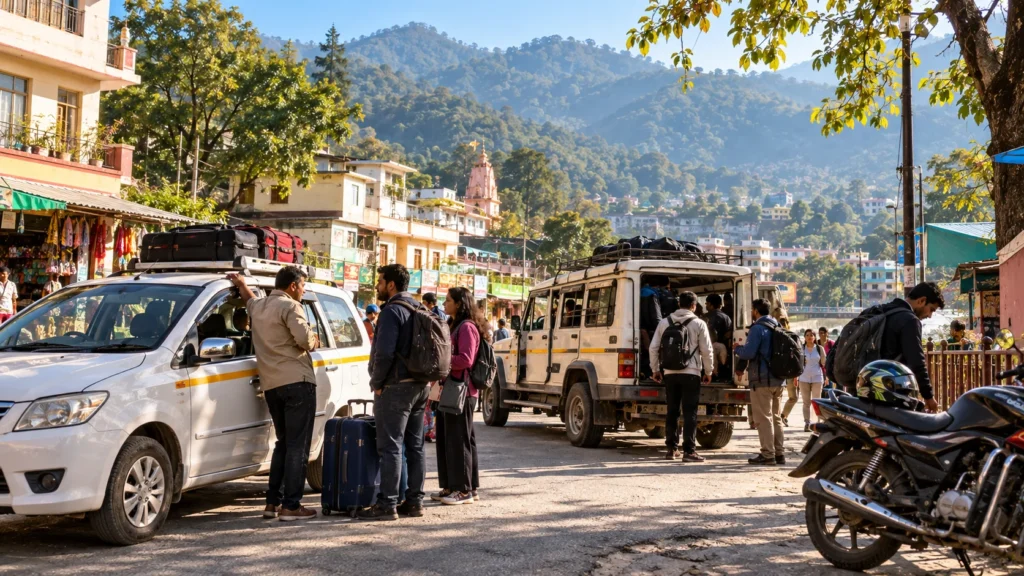
The road is paved and regularly used by taxis and jeeps, but narrow stretches and blind bends keep speeds low. Anyone who feels sick on winding roads should eat lightly and carry their usual medicine. It is better to complete the Ram Jhula to Neelkanth distance during daylight, particularly in winter or monsoon. Morning travel gives you calmer roads, softer light and clearer views across the surrounding hills.
Choosing Between a Taxi, Jeep and Scooter
A private taxi suits families, groups, children and older travellers. Online small-car fares begin near ₹1,200–₹1,300, although local round-trip quotes may be higher. Prices depend on the season, vehicle, pickup point and waiting time.
Ask whether the quote includes return travel, waiting during darshan, parking and driver charges. A complete round-trip price prevents an unpleasant surprise near the temple, where finding another vehicle may not be convenient.
Shared jeeps suit solo travellers and smaller budgets. They normally operate around Ram Jhula and Swarg Ashram, although stands can change. Online fares range from around ₹80 to ₹300 per seat, so confirm the current amount locally. Jeeps may wait until enough passengers have joined. Also ask when the last return vehicle leaves.
A scooter or motorcycle gives you more freedom, but this option is only for confident hill riders. Rentals commonly start near ₹500–₹800 per day before fuel. The road has steep climbs, blind turns and approaching buses. Wear a helmet, check the tyres and brakes, and avoid rain, fog and darkness. Beginners will be more comfortable in a taxi.
Walking from Ram Jhula to Neelkanth
The traditional trail from Ram Jhula and Swarg Ashram is roughly 12–14 kilometres one way. Most walkers need four to five hours uphill and around three hours downhill. With darshan and rest stops, the outing can take eight hours or more.
The path runs through forest sections towards Patna Waterfall and Mauni Baba Cave. Stalls may be open on parts of the trail, but carry your own water and snacks. Another trail begins around Garud Chatti. It is shorter at about nine kilometres but climbs more sharply.
Begin before 7:00 AM and travel with a guide or group on your first visit. Avoid walking after dark or during severe rain. This is a forest trail, not a casual city walk.
Reaching Neelkanth Mahadev Temple
Neelkanth Mahadev Temple stands about 1,330 metres above sea level in Pauri Garhwal. According to the Samudra Manthan story, Lord Shiva held the poison Halahala in his throat to protect creation. His throat turned blue, giving him the name Neelkanth.
The temple lies among the Manikoot, Brahmakoot and Vishnukoot valleys. Its colourful exterior shows scenes from Samudra Manthan, and a natural spring is found near the complex. Devotees commonly offer water, milk, bael leaves, flowers or coconut.
Darshan hours are generally listed from around 5:00 AM to 6:00 PM, sometimes with an afternoon break. Festival schedules can differ, so confirm the timing locally rather than depending completely on an old online listing.
Best Time for the Journey
October to March offers the most comfortable weather, although winter mornings can be cold. April to June is warmer, making an early departure important. July and August bring monsoon rain and large Shravan crowds. Roads can be wet, traffic slows and darshan queues grow longer. Maha Shivratri is similarly busy. Choose a weekday morning if you want a quieter visit.
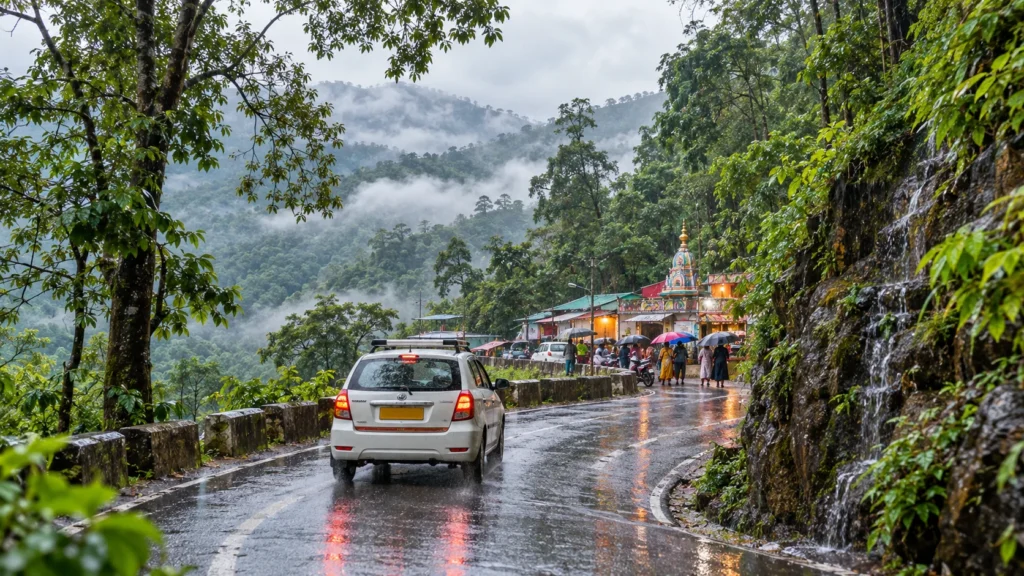
There is also a temporary access change to remember. As of October 2026, Ram Jhula suspension bridge is closed for repairs, with closure announced until December 2026. Neelkanth remains reachable by road, but pedestrian crossings and taxi pickup points may change. Ask your hotel or driver for the current arrangement before leaving.
A Comfortable Half-Day Plan
Leave Ram Jhula around 6:00 AM and aim to reach the temple near 7:30 AM. Complete darshan before larger groups arrive, have breakfast nearby and begin returning around 9:30 AM.
With this plan, the Ram Jhula to Neelkanth distance and return can usually be completed before noon. Carry water, some cash and warm clothing when needed. Mobile service may be weak in the hills. Families travelling with elderly members should avoid rushing and allow extra time around the temple.
Keep a buffer after darshan because queues at the spring, footwear counters and parking area can slow the return. If your hotel is on the opposite bank, ask the driver which bridge or road will be used while Ram Jhula remains under repair. Janaki Setu may help pedestrians, but crossing depends on your starting point. Download the route before leaving, save your driver’s number and avoid planning a train or flight immediately after the trip, especially during rain or festivals.
Frequently Asked Questions
The drive normally takes one to one and a half hours each way. Rain, weekends and religious festivals can add time.
Shared jeeps normally operate near Ram Jhula or Swarg Ashram. Confirm the current stand, departure time, return service and fare locally.
Yes. Use a private taxi with an experienced hill driver and allow extra time for crowds and uneven walking surfaces near the temple.
Yes. By road, the Ram Jhula to Neelkanth distance, darshan and return generally take four to six hours. Trekking requires a full day.
The longer forest trail is considered easy to moderate, but it involves several hours of climbing. Start early, carry water and take local guidance.
Before Leaving
The Ram Jhula to Neelkanth distance is 22–24 kilometres, but allow up to 90 minutes for the winding drive. Taxis offer comfort, shared jeeps save money and the forest trail suits fit walkers with a full day.
Leave early, check the current Ram Jhula access situation and give yourself enough time to visit the temple without worrying about the return.