The morning Ganga Aarti in Rishikesh is usually associated with Triveni Ghat and smaller riverside prayer gatherings. Most travel guides place the morning ceremony between about 5:30 AM and 6:30 AM, though some sources show a later window. Timings are not published as consistently as the famous evening Aarti, so confirm the schedule locally one day before your visit.
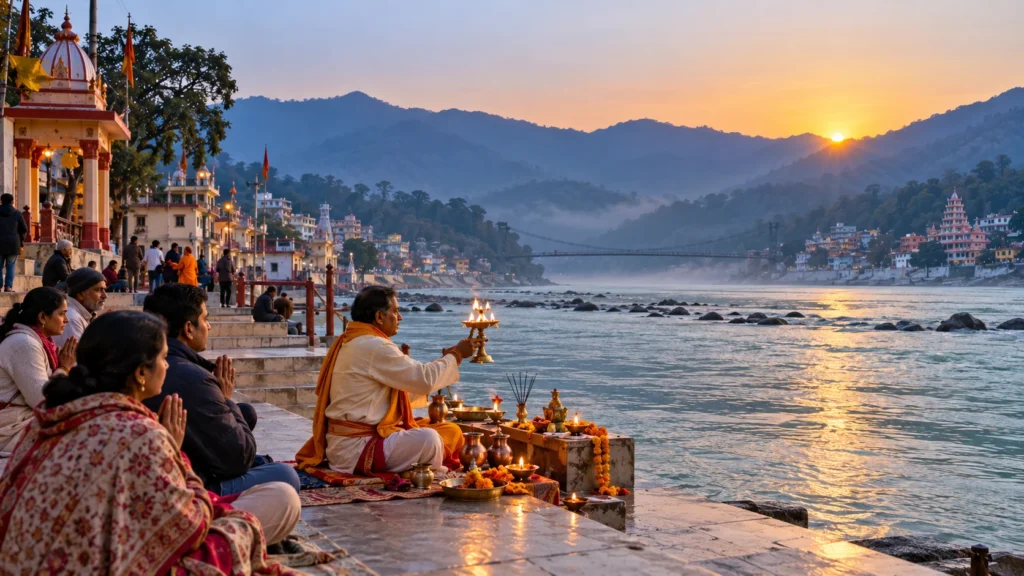
An early visit still rewards the effort. The riverfront is quieter, the air feels cooler, and life begins slowly around the ghats. You may see priests offering prayers, residents taking a holy dip, visitors meditating and small lamps floating on the water. It offers a calm start before crowds arrive.
Morning Ganga Aarti Timing
For practical planning, reach Triveni Ghat by 5:15 AM. Several current travel pages list the ceremony at roughly 5:30 AM to 6:30 AM, while another major travel listing gives 7:00 AM to 8:00 AM. This difference is exactly why a same-day or previous-evening check matters.
Ask your hotel reception, ashram office or a priest at Triveni Ghat for the next morning’s timing. Festival dates, weather, river conditions and local arrangements can affect the programme. Do not build a tight transport plan around an unconfirmed online time.
Visitors sometimes confuse morning prayers with the main Parmarth Niketan Ganga Aarti. Parmarth Niketan states that its well-known riverside Aarti takes place every day at sunset, with a yagna beginning about half an hour earlier. Its morning schedule may include prayer, yoga or a fire ceremony, but these should not automatically be described as the public sunset Ganga Aarti.
Best Place for the Morning Ceremony
Triveni Ghat is the most practical place to look for the morning Ganga Aarti in Rishikesh. It lies close to central Rishikesh and is easier to reach before sunrise than riverfront locations across town. Autos and e-rickshaws operate in the area, but service can be limited very early in the morning. Arrange your ride in advance if your hotel is far away.
The ghat has broad steps facing the river and attracts worshippers from early morning. The exact size of the ritual can vary. On an ordinary weekday, it may feel simple and local. During a festival or special religious date, more priests and devotees may take part.
What You May See at the Ghat
The morning ceremony is generally less theatrical than the evening event. A priest may light a lamp, recite mantras and offer flowers, incense or water to the Ganga. Bells and devotional songs may accompany the prayer. Local devotees often stand with folded hands or sit quietly on the steps.
Some visitors buy a small leaf bowl containing flowers and a diya. This offering is optional. If you place one in the river, follow local instructions and choose materials that do not leave plastic or other waste behind. Never step onto a wet edge just to take a photograph or release a lamp.
How Early You Should Arrive
Arrive 15 to 30 minutes before the confirmed start. This gives you time to find the correct section of the ghat, remove your footwear if requested and choose a place without interrupting worshippers. A very early arrival is rarely necessary on a normal weekday, but special dates may draw more people.
If you are attending the morning Ganga Aarti in Rishikesh during winter, remember that dawn can be cold beside the river. Sunrise is later than in summer, and mist may reduce visibility. In warmer months, an early start is comfortable, but monsoon rain can make the steps slippery.
Check the weather before leaving and keep some extra time for the journey. Narrow roads, bridge access changes or an unavailable auto can delay you even when the map shows a short distance.
Entry Fee and Seating
General access to Triveni Ghat does not normally require an entry ticket. Donations, diyas and special puja services are separate and voluntary. If someone asks for compulsory payment, confirm the purpose at an authorised counter or with a clearly identified organiser.
Dress and Behaviour
Wear modest clothes that cover the shoulders and knees. Comfortable footwear is useful for the walk to the ghat, though you may need to remove it near a prayer area. A shawl or light jacket helps in winter. During the monsoon, shoes with a firm grip are safer than smooth sandals.
Keep your phone silent. Photography is usually possible from public areas, but avoid flash, close-up filming of people who have not agreed and movement in front of a priest during the ritual. A respectful distance often gives a better view and causes less disturbance.
Do not enter deep water. The Ganga can have a strong current even when the surface looks calm. Use designated bathing areas, hold children close and follow any barrier or safety instruction at the ghat.
Reaching Triveni Ghat Before Sunrise
Triveni Ghat is near the main Rishikesh town area. From the bus stand or central market, the ride is usually short, but exact travel time depends on your starting point. Ask your accommodation to book an auto, e-rickshaw or taxi the previous evening. Save the driver’s number for the return journey.
If you are staying around Tapovan, Lakshman Jhula or Swarg Ashram, leave extra time. Early transport may be less frequent, and bridge or road arrangements can change. Walking may be suitable from nearby central hotels, but use well-lit streets and avoid isolated river paths before daylight.
Frequently Asked Questions
Morning worship and river prayers are common, but a clearly published daily programme is harder to verify than the evening Aarti. Confirm the morning Ganga Aarti in Rishikesh directly with Triveni Ghat staff, a nearby ashram or your hotel before travelling.
Most current guides place it between about 5:30 AM and 6:30 AM at Triveni Ghat, although some listings give a later time. Reaching by 5:15 AM works as a safe planning estimate only after local confirmation.
The famous public Ganga Aarti at Parmarth Niketan is held at sunset, according to the ashram’s official information. Parmarth has other morning spiritual activities, but visitors should check the daily schedule and use the correct name for each programme.
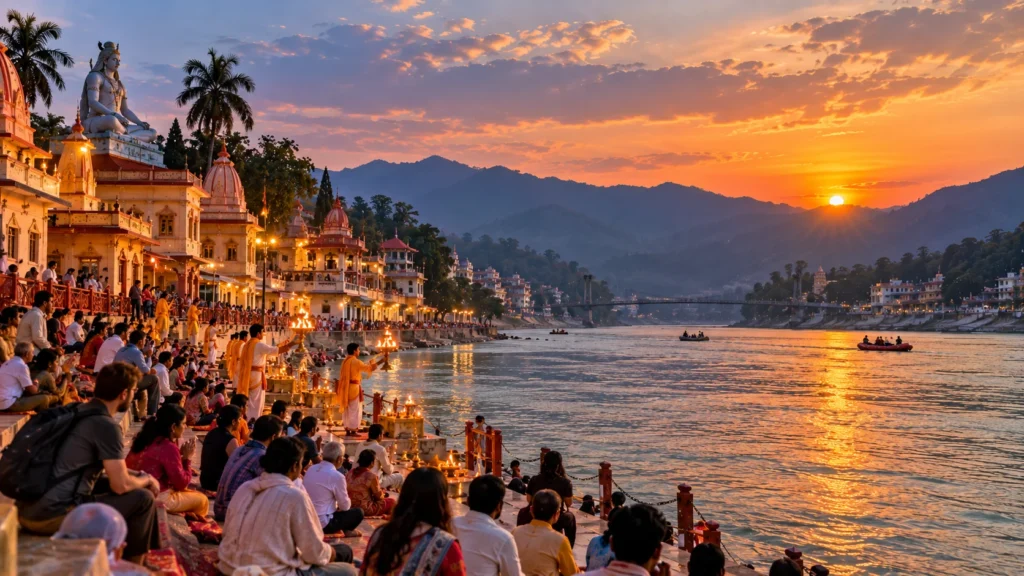
Choose the morning if you prefer fewer people, cooler air and a quieter prayer. Choose the evening if you want a larger ceremony with more lamps, music and organised participation. They offer different experiences rather than one being better for everyone.
Morning Ganga Aarti in Rishikesh Timing Check
The most useful advice for attending the morning Ganga Aarti in Rishikesh is simple: confirm the place and time locally. Online schedules differ, and the morning ritual can be smaller or less formal than travellers expect. Triveni Ghat is the best starting point, while Parmarth Niketan should be planned mainly for its official sunset Aarti. Reach early, dress respectfully and keep a safe distance from the water. With a flexible plan, the quiet river, first light and local prayer can make the morning feel worthwhile without needing a large public ceremony.