Your first yoga retreat should feel welcoming, not like a test. Rishikesh yoga retreats for beginners give new students time to learn basic postures, breathing and meditation in a place closely connected with yoga. The best programmes are calm, clearly explained and flexible enough for different bodies. You do not need to be flexible, spiritual or experienced. You only need curiosity, comfortable clothes and a willingness to follow a simple daily routine.
Many retreat pages look similar at first glance, so choosing one can be confusing. Some offer a quiet three-day introduction, while others run for a week or longer. A few focus mainly on asana. Others include yoga philosophy, Ayurveda, nature walks, sound healing or Ganga Aarti. This guide explains what matters, what questions to ask and how to choose a retreat that matches your pace.
Why Rishikesh Works Well for a First Retreat
Rishikesh has everything a beginner needs in one compact area: experienced teachers, different retreat lengths, vegetarian food and a community built around yoga. Morning classes often begin when the town is quiet, and evenings may include meditation or time beside the Ganga. The setting helps you step away from the usual rush without requiring an extreme lifestyle change.
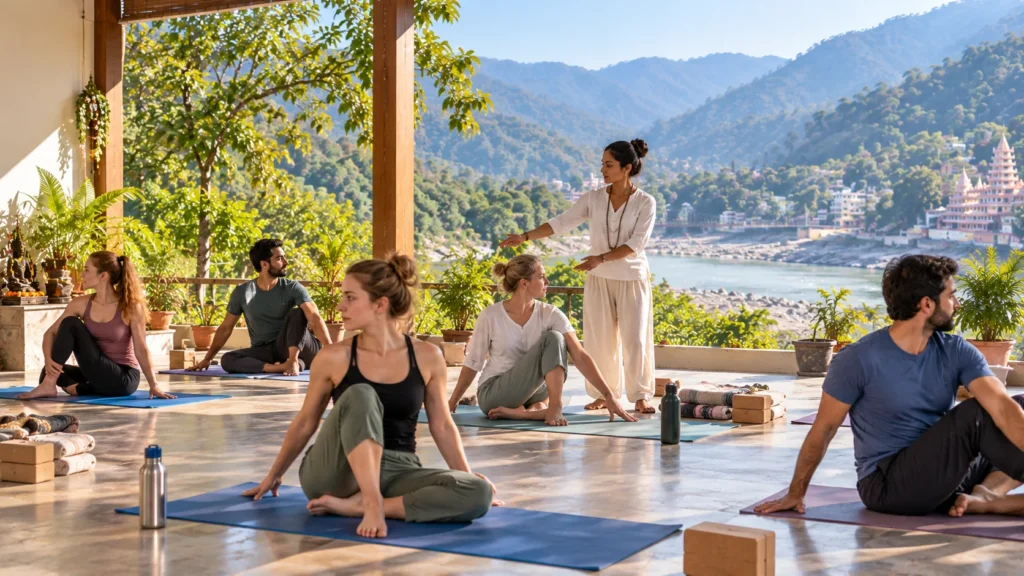
Good Rishikesh yoga retreats for beginners also teach more than shapes. A well-planned day introduces how to breathe during movement, how to sit comfortably and how to rest properly after practice. This foundation is more useful than trying advanced poses for a photograph. It gives you skills you can continue at home.
What a Beginner-Friendly Retreat Should Include
A beginner programme should name its level openly and state that previous experience is not required. Look for Hatha yoga, basic alignment and guided relaxation rather than a schedule filled only with fast flow classes. Teachers should offer simpler options, explain safe entry and exit from a pose, and welcome questions.
Most residential packages include a room, two or three vegetarian meals and daily classes. Some include airport transfers, excursions, massages or cleansing practices; many do not. Read the inclusions line by line. “All-inclusive” can mean different things at different centres.
| Feature | A good beginner option | Point to confirm before paying |
| Yoga classes | Slow Hatha, basic alignment and rest | Are modifications offered for injuries? |
| Daily pace | Two main practices with breaks | Are all sessions compulsory? |
| Group size | Small enough for personal guidance | What is the maximum number of guests? |
| Meals | Fresh vegetarian food | Can allergies or vegan needs be handled? |
| Room | Clean private or shared choice | Is the bathroom attached and is hot water available? |
| Support | Teacher available for questions | Is there an arrival orientation? |
Choosing the Right Length
Three days can work if you are already travelling in the area and want a gentle introduction. It gives you a taste of the routine, but one arrival day and one departure day leave limited practice time. Five days allow more repetition without taking a full week away from work. Seven days usually offer the best balance for a first dedicated retreat because your body has time to settle and you can practise the same basics more than once.
Two weeks suit people who want a deeper reset or want to prepare for regular practice. Longer is not automatically better. If you are new to early mornings, vegetarian meals or shared living, a focused week may feel more enjoyable than an ambitious month.
When comparing Rishikesh yoga retreats for beginners, check whether the advertised duration means days or nights. A “seven-day” programme may include only five full teaching days. Ask for the arrival time, departure time and full timetable before booking travel.
A Realistic Day at a Retreat
Schedules vary, but a normal day may begin around 6:00 a.m. with breathing, meditation or gentle movement. An asana class follows, then breakfast and a rest period. Late morning may bring philosophy, anatomy or an excursion. After lunch, there is usually free time. Evening practice is often softer and may include Yoga Nidra, chanting, sound meditation or Ganga Aarti.
You should not feel forced to complete every posture. Mild muscle tiredness can happen when you begin, but sharp pain, dizziness or numbness is a reason to stop and tell the teacher. Share injuries, pregnancy, recent surgery and important health conditions before the first class. A responsible centre will adapt the practice or recommend medical advice when needed.
How to Compare Teachers and Teaching Quality
The word “certified” alone does not tell you how a class will feel. Ask who teaches beginner groups, how long they have taught and whether they have experience with mixed abilities. A short call can reveal more than a long sales page. Notice whether the team asks about your needs or immediately pushes you to pay.
The strongest Rishikesh yoga retreats for beginners publish a sample schedule, clear room options, cancellation rules and recent guest feedback. They also explain what they cannot provide. Be careful with guaranteed weight loss, instant healing or pressure to book through an unverified personal account. Pay through the official website or a traceable business channel and keep the receipt.
What to Pack
Bring light, modest clothes that allow movement, plus a warmer layer for early mornings from November to February. Pack easy slip-on footwear, a refillable bottle, personal medicines, sunscreen and mosquito repellent. Many centres provide mats, but confirm this if you prefer not to travel with one. A small notebook is useful for breathing instructions and the home routine you learn.

Questions to Ask Before Booking
Before choosing among Rishikesh yoga retreats for beginners, send the centre a short list of direct questions:
1. Is every main class suitable for a complete beginner?
2. How many full practice days are included?
3. What happens if I need to miss a session?
4. Which meals, trips, treatments and transfers cost extra?
5. Can you accommodate my food allergy or health limitation?
6. What is the refund or date-change policy?
7. Who should I contact if my arrival is delayed?
Clear, specific replies are a good sign. Save the answers with your payment record so both sides understand the booking.
Frequently Asked Questions
No. Flexibility is not an entry requirement. Beginner practice should meet your body where it is and improve mobility gradually.
One week is enough to understand a basic routine, experience daily practice and decide what you want to continue. It is not a promise of mastery, and that is completely fine.
Yes. Solo guests are common at beginner retreats in the city. Ask about airport pickup, check-in hours, room security and the person available after reception closes.
Yoga philosophy, Sanskrit chants or ceremonies may be present, but the amount differs by centre. Ask for the timetable if you prefer a practical wellness focus or want a traditional ashram experience.
Make Your First Retreat a Useful Beginning
Choose Rishikesh yoga retreats for beginners that answer your questions honestly and leave room for rest. A calm, well-taught week can become a practical beginning rather than a one-time escape. Always compare details carefully before making your final online payment.