If you've been researching yoga retreats in Rishikesh, you've probably come across these two names side by side and wondered which one actually suits you. Both are serious, traditional paths — not just styles of physical exercise — and both are often misunderstood by people who assume "yoga" means one thing. In reality, Raja Yoga and Kundalini Yoga ask different questions of the practitioner, use different tools, and lead the mind through different territory. This guide breaks down what separates them, what they share, and how to decide which path fits where you are right now.
What Is Raja Yoga?
Raja Yoga is often called the "royal path" of yoga, and the name is fitting — it is less about achieving anything external and more about mastering the mind itself. Its framework comes from Patanjali's Yoga Sutras, a foundational text that lays out eight limbs of practice, with the ultimate aim of quieting the fluctuations of the mind so that clarity and stillness can emerge naturally.
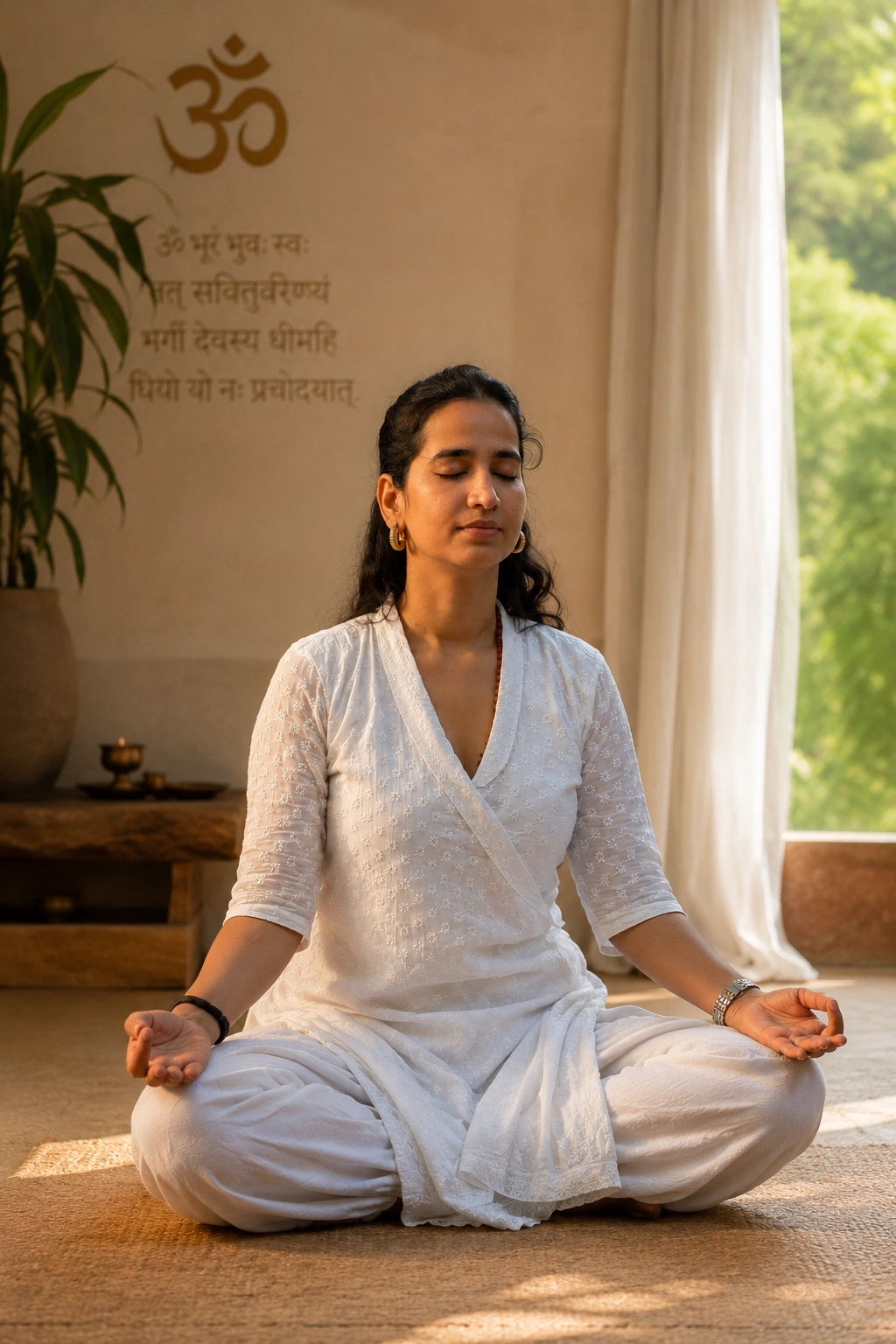
The eight limbs (Ashtanga) of Raja Yoga are:
- Yama — ethical restraints and social conduct
- Niyama — personal observances and discipline
- Asana — physical posture
- Pranayama — breath control
- Pratyahara — withdrawal of the senses
- Dharana — concentration
- Dhyana — meditation
- Samadhi — absorption, the final goal
In practice, a Raja Yoga retreat tends to move through several complementary paths within the same week — Karma Yoga (selfless action), Bhakti Yoga (devotion and surrender), Jñāna Yoga (self-inquiry and discernment), and Raja Yoga proper (meditation and inner stillness). This is why programs built around Raja Yoga often feel like a well-rounded reset rather than a single technique repeated daily. The daily rhythm is steady and grounding: gentle Hatha practice, breathwork, satsang, journaling, and long stretches of silence, all aimed at settling the nervous system and creating space for genuine reflection. Our own Raja Yoga Sādhana retreat in Rishikesh follows exactly this structure across 3, 5, and 7-day formats.
What Is Kundalini Yoga?
Kundalini Yoga takes a different route toward a related destination. Where Raja Yoga is primarily concerned with mental stillness, Kundalini Yoga works directly with prana — the vital energy believed to move through subtle channels (nadis) and gather at energy centers known as chakras. The tradition holds that this energy, often symbolized as a coiled serpent resting at the base of the spine, can be gradually awakened and guided upward through sustained, disciplined practice.
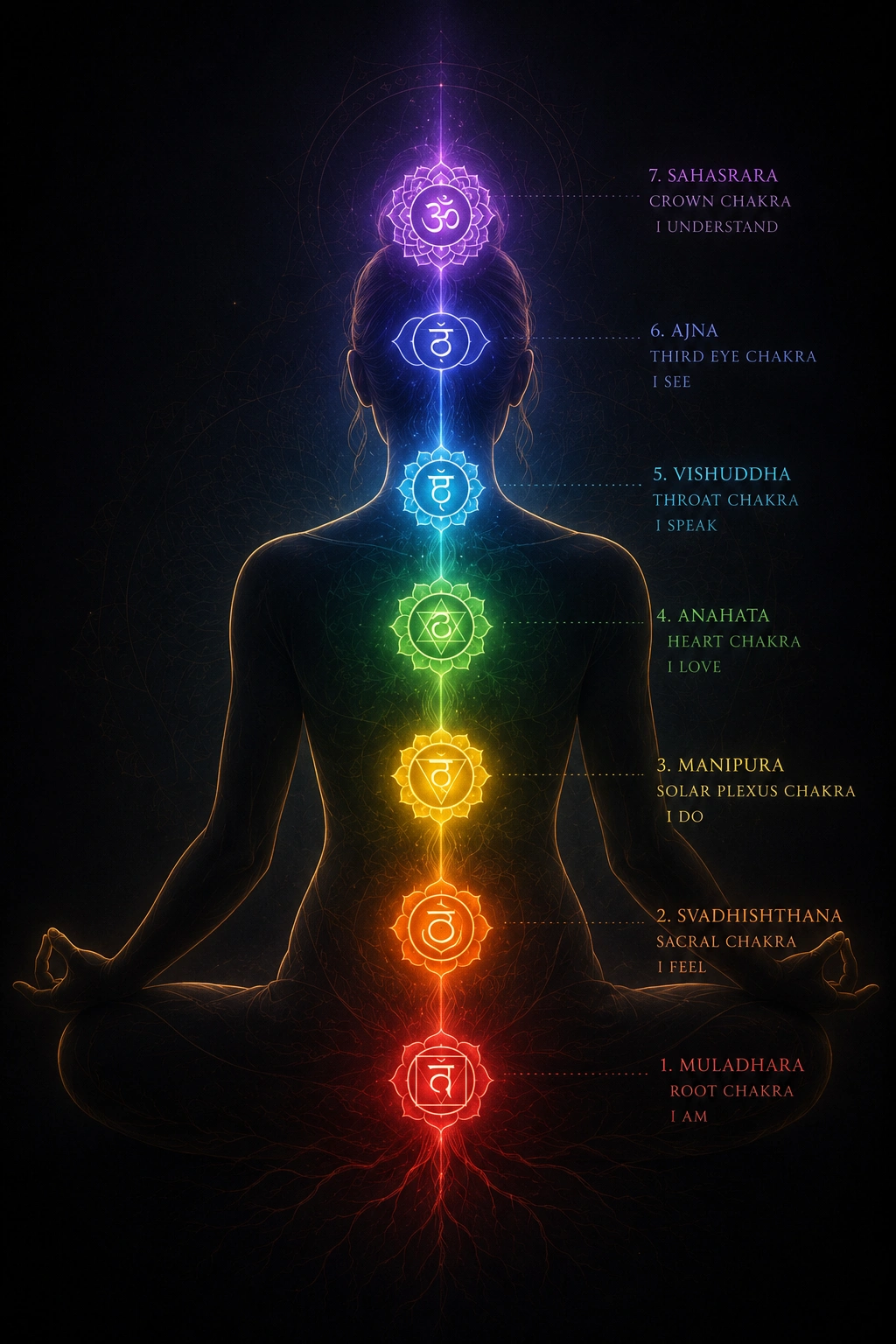
The seven main chakras this energy is said to move through are:
- Muladhara — root chakra, grounding and stability
- Svadhisthana — sacral chakra, creativity and emotion
- Manipura — solar plexus chakra, willpower and confidence
- Anahata — heart chakra, love and compassion
- Vishuddha — throat chakra, expression and truth
- Ajna — third-eye chakra, intuition and insight
- Sahasrara — crown chakra, higher consciousness
Traditional Kundalini Yoga, particularly as taught within lineages such as the Bihar School of Yoga, relies heavily on mantra chanting, pranayama, chakra-focused meditation, and specific postures designed to stimulate and balance this energy safely. It is worth being clear about something the tradition itself insists on: authentic Kundalini Yoga is not about chasing a dramatic "awakening" experience. It is a slow, respectful, and progressive foundation-building process, ideally guided by a teacher rooted in a genuine lineage rather than approached as a shortcut to altered states. Our Kundalini Shakti Sādhana retreat is built specifically around this progressive, lineage-based approach.
Raja Yoga vs Kundalini Yoga: Key Differences at a Glance
Because both paths borrow techniques from each other — breathwork, meditation, and mantra appear in both — it helps to see the differences laid out directly rather than described in isolation.
| Aspect | Raja Yoga | Kundalini Yoga |
|---|---|---|
| Core text / origin | Patanjali's Yoga Sutras | Tantric and Hatha Yoga traditions; Bihar School of Yoga lineage |
| Primary focus | Mastering and stilling the mind | Awakening and balancing prana through the chakras |
| Main tools | Meditation, ethical discipline, self-inquiry, concentration | Mantra chanting, pranayama, chakra meditation, kriya practices |
| Underlying goal | Samadhi — mental absorption and clarity | Progressive energetic balance and inner transformation |
| Typical retreat structure | Karma, Bhakti, Jñāna, and Raja Yoga combined | Hatha Yoga, prāṇāyāma, mantra, chakra work, satsang |
| Pace of practice | Gradual, contemplative, evenly paced | Gradual but energetically focused, often more intense |
| Best suited for | Beginners and intermediate practitioners seeking a broad reset | Those with some existing practice, or anyone drawn specifically to subtle-body work |
| Physical intensity | Gentle to moderate | Moderate, with an emphasis on breath and energy rather than strength |
| Role of a teacher/lineage | Helpful, though the path can be self-directed | Strongly recommended; traditionally passed down through direct lineage |
Philosophical Roots: Two Branches of the Same Tree
It's worth remembering that neither path exists in a vacuum. Raja Yoga and Kundalini Yoga both descend from the same broader Indian philosophical tradition, and Patanjali's own sutras acknowledge subtle energy and higher states of consciousness even though his primary emphasis is psychological and ethical. Kundalini Yoga, by contrast, draws more directly from tantric philosophy, where the body itself — its channels, centers, and vital force — is treated as the primary instrument of transformation, not merely a vessel for the mind.
This distinction matters practically. A Raja Yoga retreat will spend more time on journaling, self-inquiry, and philosophical discussion (satsang), because the work is largely happening at the level of thought and attention. A Kundalini Yoga retreat will spend more time on chanting, specific breath ratios, and chakra-focused meditation, because the work is understood to be happening at the level of energy and the subtle body.
Techniques and Practices Compared
Both paths share a daily foundation of traditional Hatha Yoga, morning silence, and sattvic vegetarian meals — this is common ground across most authentic Indian yoga retreats. Where they diverge is in the details layered on top of that foundation.
| Practice Element | Raja Yoga Emphasis | Kundalini Yoga Emphasis |
|---|---|---|
| Meditation style | Awareness and concentration (dharana/dhyana) | Chakra visualization and energy awareness |
| Breathwork | Calming, regulating pranayama | Specific kriyas tied to energy movement |
| Chanting | Occasional, supportive | Central and structured |
| Selfless service (Karma Yoga) | A core pillar of the retreat | Present, but secondary to energy work |
| Special rituals | Satsang and philosophy discussions | Fire ceremony (Havan), sacred site visits |
Which One Should You Choose?
If your primary goal is to slow down, quiet a busy mind, and build a sustainable daily practice you can carry home, Raja Yoga is usually the more accessible entry point. It doesn't assume prior experience, and its structure — moving through Karma, Bhakti, Jñāna, and meditation — gives you a taste of several approaches so you can discover what resonates.
If you already have some grounding in yoga or meditation and feel specifically drawn to working with energy, breath, and the subtle body, Kundalini Yoga offers a more focused and traditional path. It asks for a bit more openness to structured discipline, but it does not require prior Kundalini experience — only a willingness to follow the process patiently rather than rushing toward an experience.
Neither path is "more advanced" than the other in a simple hierarchical sense. They are better understood as different lenses on the same underlying goal: a steadier, clearer, more integrated way of living.
Can You Practice Both?
Yes, and in many traditional settings, people do exactly that over time. It's common to begin with a Raja Yoga foundation — building discipline, stillness, and self-awareness — before moving into the more specific energetic work of Kundalini Yoga. Think of Raja Yoga as building the container, and Kundalini Yoga as working more precisely with what happens inside it. Retreat centers that offer both paths, such as ours here in Rishikesh, often see participants return for the second experience once they've integrated the first.
Frequently Asked Questions
Final Thoughts
The choice between Raja Yoga and Kundalini Yoga doesn't have to be complicated. Ask yourself honestly what you're looking for right now — a broad reset for an overstimulated mind, or a more specific journey into breath, mantra, and subtle energy. Both paths are rooted in genuine tradition, both ask for sincerity rather than perfection, and both, practiced with patience, lead toward the same quiet clarity that yoga has always promised.
Guides traditional yoga retreats — including Raja Yoga Sādhana and Kundalini Shakti Sādhana — within the lineage of the Bihar School of Yoga, working directly under the guidance of Guru Swami Samarpan Saraswati and informed by the teachings of Swami Satyananda Saraswati and Swami Niranjanananda Saraswati.