The Valley of Flowers trek is a high-altitude Himalayan walk in Chamoli, Uttarakhand. The valley is famous for alpine flowers, waterfalls, streams and wide mountain scenery. Before planning, travellers should understand the daily timing, route length, altitude and walking effort. This guide answers the main questions in simple language and explains why conditions can change during the season.
Valley of Flowers timing
The park is generally visited during daylight hours, and visitors must return to Ghangaria before the daily closing time. Uttarakhand Tourism states that overnight stay or camping inside the valley is not allowed and trekkers should be back at Ghangaria by 5:00 p.m. Common travel guidance lists early-morning opening and an afternoon last-entry cut-off, but forest rules can change. Confirm the current entry time, permit process and closing instruction before starting.
| Timing point | Planning guidance |
|---|---|
| Best start | Early morning, after breakfast in Ghangaria |
| Last entry | May be limited in the afternoon; confirm locally |
| Return deadline | Reach Ghangaria before the notified closing time, commonly 5:00 p.m. |
| Camping inside the valley | Not allowed |
| Best flower months | July to September usually offers the strongest bloom |
Valley of Flowers trek difficulty
The Valley of Flowers trek is usually described as moderate to challenging. The trail is not a technical climb, but the long walking day, uneven stones, wet sections, altitude and changing weather can be tiring. A person who walks regularly may manage the main valley route with preparation, while first-time trekkers should train and avoid rushing.
The route to Ghangaria has a steady climb, and the valley trail can become muddy after rain. Carry a light daypack, wear shoes with a firm grip and use walking poles if your knees need support. Do not compare the trek only by kilometre count; altitude and terrain matter as much as distance.
Valley of Flowers trek height
The valley is situated at around 3,600 metres above sea level. Ghangaria is around 3,050 metres, while nearby Hemkund Sahib rises much higher, with the route reaching approximately 4,389 metres in official Uttarakhand Tourism trek information. This difference explains why some visitors feel breathless even when the walking trail looks manageable.
| Place or route point | Approximate elevation |
|---|---|
| Ghangaria | Around 3,050 m |
| Valley of Flowers | Around 3,600 m |
| Hemkund Sahib route | Up to about 4,389 m |
Valley of Flowers trek length
The exact valley of flowers trek length depends on where you begin counting. The walk from Ghangaria to the main valley is about 4 km one way according to Uttarakhand Tourism. The approach from Govindghat or Pulna to Ghangaria adds roughly 13 to 15 km, depending on the roadhead and route used. A complete itinerary may cover around 35 to 37 km when the return route and optional Hemkund Sahib visit are included.
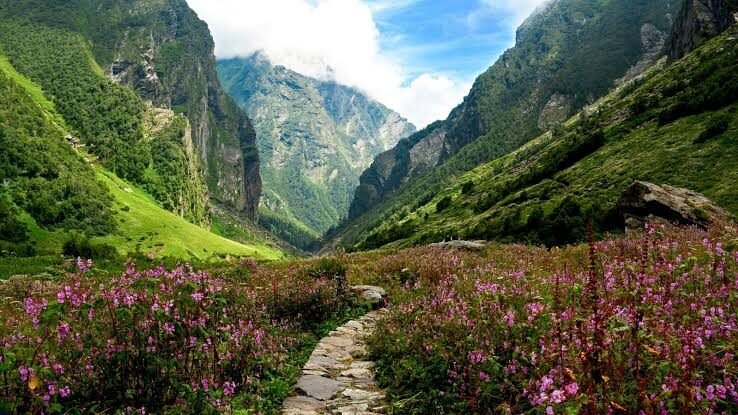
Because different operators use different starting points and include different side trips, always ask whether a quoted distance includes only the valley day or the full trek package. This avoids confusion when comparing itineraries.
Valley of Flowers trek duration
A focused visit needs several days because the trailhead is far from the plains. Many organised itineraries use five to seven days, including the road journey, Ghangaria stay, valley day and return. The valley itself is normally explored as a full day trip from Ghangaria. Add another day if you want to visit Hemkund Sahib or keep a weather buffer.
| Trip style | Suggested duration | What it includes |
|---|---|---|
| Fast but tiring | 4–5 days | Road travel, Ghangaria and one valley day |
| Comfortable first trip | 6 days | Travel buffer and a relaxed return |
| Valley plus Hemkund | 6–7 days | Extra high-altitude day and flexible schedule |
A simple route plan
Use this as a planning outline, not a fixed timetable. Road conditions, permits and weather may require changes.
| Day | Plan |
|---|---|
| Day 1 | Travel towards Joshimath or the chosen overnight stop. |
| Day 2 | Reach Govindghat or Pulna and trek to Ghangaria. |
| Day 3 | Trek from Ghangaria to the Valley of Flowers and return before closing. |
| Day 4 | Rest or visit Hemkund Sahib only if conditions and fitness allow. |
| Day 5–6 | Return by trek and road with a buffer for delays. |
Best time and safety tips
The park is generally open during the summer and monsoon trekking season, while flowers are most abundant from July to September. Dates, entry permissions and road access can change each year. Check the latest Forest Department or Uttarakhand Tourism notice before booking non-refundable travel.
- Acclimatise in Ghangaria and do not ignore headache, nausea or unusual breathlessness.
- Start early so you can walk slowly and return before the closing deadline.
- Carry rain protection, a warm layer, water, snacks and a small first-aid kit.
- Do not pick flowers, feed wildlife or leave plastic on the trail.
- Use a local guide or registered operator if you are not confident about the route.
Who should prepare more carefully
People who are not used to long walks, steep climbs or high altitude should build fitness before the trip. Older travellers and anyone with a medical condition should discuss the route with a qualified doctor and travel with a responsible companion. Do not treat a pony, porter or guide as a replacement for personal preparation. If you feel unwell, stop, inform your group and follow local advice instead of pushing towards the valley.
A good trek day is not a race. Carry only what you need, take short breaks before you become exhausted and keep enough daylight for the return. Weather can change quickly in the mountains, so a flexible itinerary is safer than a strict promise to cover every optional trail.
Frequently Asked Questions
These short answers cover the questions travellers usually ask before planning this trip. Conditions can change, so confirm local rules before leaving.
What is the Valley of Flowers timing?
Visitors should start early and return to Ghangaria before the notified closing time, commonly 5:00 p.m. Last-entry rules can change, so confirm them locally.
How difficult is the Valley of Flowers trek?
It is generally moderate to challenging because of long walking, uneven trails, rain, altitude and changing weather. It is not a technical mountaineering route.
How long is the Valley of Flowers trek?
The valley section is about 4 km one way from Ghangaria. The full trip can be around 35–37 km when the approach, return and optional Hemkund route are included.
How many days are enough for Valley of Flowers?
Six days is a comfortable starting point for many travellers. Add another day for Hemkund Sahib, bad weather or a slower pace.